Reduced mobility: what are we talking about?
With age, after an illness or because of a disability, some things become hard: climbing the stairs, walking more than a few dozen metres, getting out of the house. Luxembourg has several schemes that can help. They are not all run by the same body and do not share the same conditions: some depend on how much help you need day to day, others on your degree of disability, others on household income.
This guide covers the main rights and support, for you or for a parent. In each case the decision lies with the competent body, so always check your situation on guichet.lu.
| Your need | The scheme | Who decides |
|---|---|---|
| Equipment or a home adaptation (stairlift, platform lift, ramp…) | Care Insurance (assurance dépendance) | CNS, after assessment by the AEC |
| Adaptation works not covered by Care Insurance | Special home-adaptation grant | Ministry of Housing (Guichet unique des aides au logement) |
| Parking close to where you're going | Parking card for people with disabilities | Ministry of Mobility and Public Works |
| A seat and priority in queues | Priority card / disability card | Ministry of Home Affairs |
| Getting around when public transport is no longer possible | Adapto | Public Transport Administration |
| Paying less tax | Allowances for extraordinary expenses | Direct Tax Administration (ACD) |
| Information and advice | Info-Handicap | National Disability Council |
1. Care Insurance: technical aids and home adaptation
If you need another person's help in daily life, Care Insurance (assurance dépendance) can cover help and care, but also technical aids and home adaptations. It does not depend on your income.
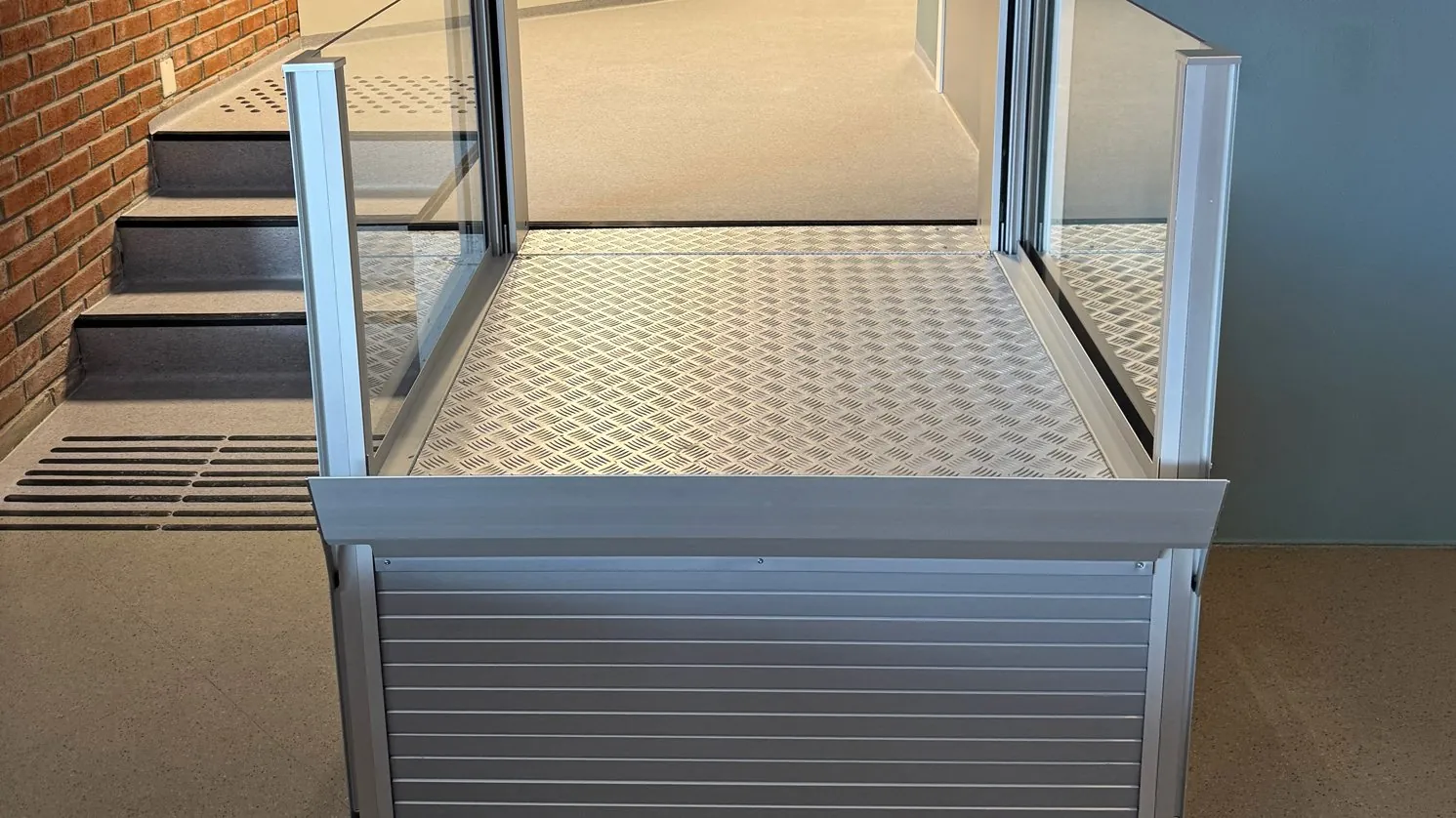
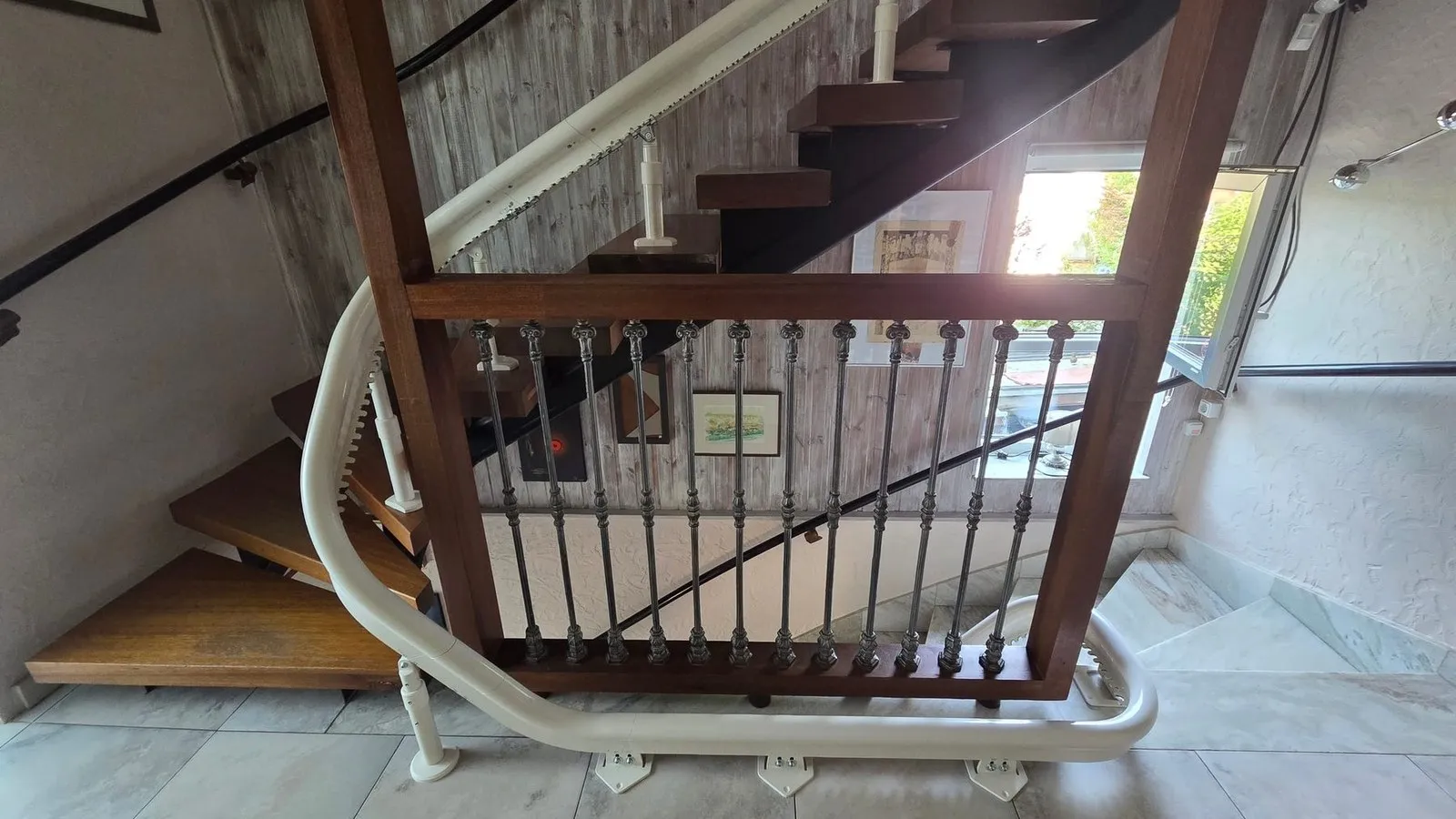
Technical aids: depending on your situation, equipment such as a stairlift or a platform lift can be recognised as a technical aid. The law sets a ceiling of €35,000 per technical aid.
Home adaptation: guichet.lu gives examples such as a level-access shower, a lift or a concrete ramp. The ceiling is €35,000 per dependent person for all adaptations together.
These are ceilings, not guaranteed amounts: the AEC (the administration that assesses and monitors Care Insurance) evaluates your needs and the right solution.
How to apply
1.The application goes to the CNS. It consists of a form and the R20 medical report, completed by your treating doctor (free for you). Our R20 form guide explains each step.
2.An AEC assessor visits you at home.
3.You receive the decision. Wait for it before ordering anything or starting works: there is no retroactive cover, and a technical aid bought without the AEC's prior opinion is not covered.
If you rent or live in a co-owned building, a home adaptation needs the written agreement of the owner or the building manager (syndic). For an urgent need for a basic technical aid, the AEC has a helpline (see contacts below).
Would you like to know the price for your staircase?
More on our Care Insurance page and in our stairlift financing guide. Working in Luxembourg but living across the border? Different rules apply: read our article on stairlifts for cross-border workers.
2. The state grant for adapting your home
When works are not covered by Care Insurance, another scheme can step in: the grant for special adaptations of homes for people with disabilities (aide pour aménagements spéciaux), awarded by the Ministry of Housing through the Guichet unique des aides au logement.
Eligible works: access to the home, internal alterations that make moving around easier, wider doors, the first installation of a special lift or equivalent, special equipment in the kitchen, bathroom and toilet.
Amount: at most €20,000 per person, 60% of the cost of the works, and never more than the part Care Insurance did not cover.
Conditions: household income must stay below a limit set by law, and the home must be your main residence.
Deadline: apply within 2 years of the invoice date. The application includes a CNS certificate confirming that Care Insurance did not cover these works.
The two schemes complement each other but never fund the same works. Overview on our financial aid page.
3. Getting around: parking, priority and adapted transport
The parking card for people with disabilities
It lets you park in reserved spaces, displayed behind the windscreen. It can be issued to residents whose disability limits their mobility, for example if you cannot walk alone or without a break for more than 100 metres, or only with crutches, a cane, a rollator or a wheelchair. The disability should in principle last more than 6 months.
You apply to the Ministry of Mobility and Public Works with a certificate from your doctor; a doctor from the medical commission then examines you. The card is valid for up to 5 years, in Luxembourg and in the other European Union countries.
The priority card and the disability card
These free cards give priority in queues and a seat on public transport. They are for people with an impairment of at least 30% who live in Luxembourg or work there as cross-border workers. The type C disability card extends these rights to the person accompanying you when you cannot move around without help.
Would you like to know the price for your staircase?
You apply to the Service des cartes d'invalidité (Ministry of Home Affairs). No medical certificate is needed at the start: the medical service contacts you later.
Adapto: transport on demand
Adapto is an on-demand transport service in adapted vehicles for people who can travel neither by their own means nor by public transport. You are picked up on the pavement at your starting point. You must live in Luxembourg, be at least 12 years old and attach a medical certificate. A temporary condition such as a broken leg does not qualify.
Trips are free, up to 360 trips a year (a return journey counts as two). You book through the Mobilitéitszentral by phone, online or in the app; same-day bookings are possible up to 2 hours before departure, by phone only.
4. Tax: possible allowances
Two tax measures may apply to a person with reduced mobility or their family:
Flat-rate disability allowance: on request, €150 to €735 a year depending on the reduction in working capacity, and €1,455 for people who need another person's assistance and care.
Help and care costs due to dependency: if you pay for help and care yourself because of your own dependency or your spouse's, a flat-rate allowance of up to €450 a month (€5,400 a year) is possible, capped at the costs actually paid.
You can also declare actual costs if that is more favourable. Different rules apply to non-residents. For your own case, contact the Direct Tax Administration (ACD) or a tax adviser.
5. Income, local services and accessibility
Income for severely disabled persons (RPGH): for residents whose severe disability prevents them from working. The conditions are on guichet.lu.
Local services: communes organise or coordinate meals on wheels, and emergency call (télé-alarme) services exist. Both are paid services: your commune can tell you what is available near you.
Accessibility: places open to the public must meet accessibility rules, and you can request a "reasonable accommodation" (aménagement raisonnable). See our article on building accessibility in Luxembourg.
And to stay safe at home day to day, our article on preventing falls at home gives simple tips, room by room.
Would you like to know the price for your staircase?
Where to get information: useful contacts
Info-Handicap (National Disability Council): information and advice, for relatives too. +352 366 466 · info@iha.lu · info-handicap.lu
CNS – Care Insurance: +352 27 57 44 55 (weekdays, 8:00–16:30) · assurancedependance@secu.lu
AEC – technical aids helpline (urgent needs): +352 247 86 040
Guichet unique des aides au logement: 8002 10 10
Service des cartes d'invalidité (Ministry of Home Affairs): +352 247 84 600
Mobilitéitszentral (Adapto bookings): +352 24 65 24 65
guichet.lu: every procedure, kept up to date
Where to start
1.Talk to your treating doctor. They complete the R20 report if a Care Insurance application makes sense.
2.Have an adviser come to your home. MPG has no showroom: we visit you free of charge, look at the stairs, entrance or bathroom, and explain the possible solutions, with a detailed written quote.
3.Apply before ordering anything. If your situation allows, we help you prepare the Care Insurance application.
4.Installation and aftercare by our technicians, with annual maintenance by MPG. For Otolift stairlifts, the rail is guaranteed for life with this maintenance (statutory warranty 2 years).
Frequently asked questions
Does Care Insurance depend on my income?
No. According to guichet.lu, anyone can benefit regardless of income, provided they are recognised as dependent after the AEC's assessment. It is the Ministry of Housing's special adaptation grant that has an income condition.
Can Care Insurance and the Ministry of Housing grant be combined?
Yes, for different works. The special adaptation grant covers at most the part Care Insurance did not cover, backed by a CNS certificate. The same works are never funded twice.
Who can get a parking card for people with disabilities?
Residents whose disability severely limits their mobility, for example if you cannot walk alone for more than 100 metres or only with an aid (cane, rollator, wheelchair), as well as blind people and people with a progressive illness. The decision follows the opinion of a doctor from the medical commission.
Can I order a stairlift before the AEC's decision?
We advise against it if you are counting on Care Insurance: the law provides no retroactive cover, and a technical aid bought without the AEC's prior opinion is not covered. First the home visit and quote, then the application, then wait for the decision.
Let's talk about your project
We come to you, anywhere in Luxembourg, for a free, no-obligation home visit and quote. We call you back within 24 hours and speak Luxembourgish, French, German or English.
+352 33 33 73 or request a quote online.
Would you like to know the price for your staircase?
*This article summarises the situation as of 9 November 2026 for information only. It does not constitute legal, tax or medical advice. Conditions, amounts and contacts may change: check them on guichet.lu or with the relevant body.*
Sources
Guichet.lu, « Demander l'assurance dépendance pour une mise à disposition d'aides techniques », modifié le 24/02/2026 (accessed 09/11/2026)
Guichet.lu, « Demander l'assurance dépendance pour des travaux d'adaptation du logement », modifié le 22/05/2024 (accessed 09/11/2026)
Guichet.lu, « Aide pour aménagements spéciaux de logements pour personnes en situation de handicap », modifié le 17/02/2026 (accessed 09/11/2026)
Guichet.lu, « Carte de stationnement pour personnes handicapées », modifié le 21/01/2026 (accessed 09/11/2026)
Guichet.lu, « Carte gratuite d'invalidité et/ou de priorité », modifié le 09/10/2026 (accessed 09/11/2026)
Guichet.lu, « Adapto - carte d'accès au service de transport pour personnes à mobilité réduite », modifié le 17/05/2024 (accessed 09/11/2026)
Guichet.lu, « Obtenez des aides si vous êtes en situation de handicap ou de dépendance », modifié le 20/05/2026 (accessed 09/11/2026)
Administration des contributions directes, « Abattement forfaitaire pour charges extraordinaires des invalides et infirmes », mis à jour le 23/08/2022 (accessed 09/11/2026)
Guichet.lu, « Abattement pour charges extraordinaires (CE) », modifié le 09/03/2021 (accessed 09/11/2026)
Guichet.lu, « Services d'aide aux personnes âgées et/ou dépendantes », modifié le 04/09/2012 (accessed 09/11/2026)
Info-Handicap, dépliant de présentation (FR, 2025) (accessed 09/11/2026)